The upward push of the space pressure Orbital Warship carrier: a brand new era of Extraterrestrial protection
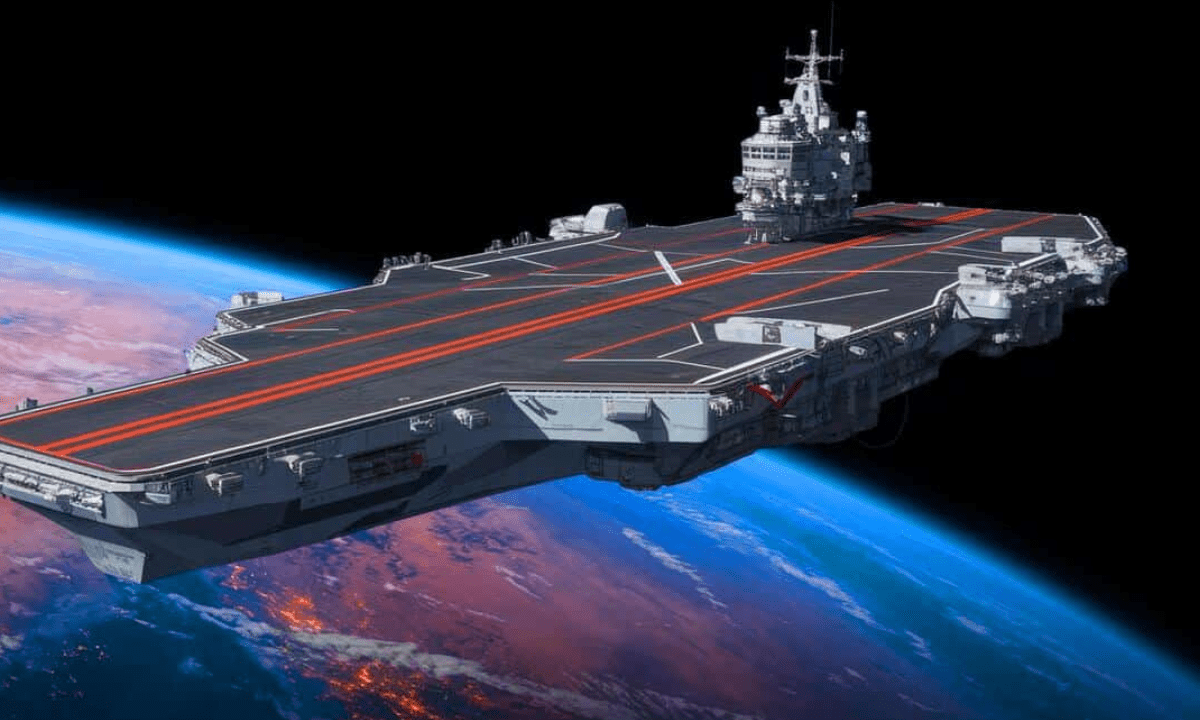
Within the mid-21st century, as orbital infrastructure increased and near-Earth area became a brand new arena for financial and military competition, one development reshaped strategic protection thinking: the introduction of the distance pressure Orbital Warship provider (OWC). Designed to deliver electricity past the atmosphere, preserve orbital stability, and shield country-wide space belongings, the OWC stands as one of the maximum superior aerospace defense systems ever engineered.
What’s an Orbital Warship provider?
A space pressure Orbital Warship provider is a large, modular spacecraft that serves as a mobile base, command center, and launch platform for a variety of orbital and deep-space tactical craft. In contrast to traditional naval carriers that function on the sea, the OWC features in low Earth orbit (LEO) or geosynchronous orbit (GEO), permitting it to oversee strategic operations in the area.
Key capabilities consist of:
- Deployment of self-reliant fighter drones for orbital patrol and anti-satellite operations
- Housing of crewed interceptors able to maneuver in high-Earth orbit
- effective directed-strength protection structures for intercepting threats
- Onboard fabrication bays for repairing satellites and building replacement components
- AI-pushed command hubs to coordinate area site visitors, defense grids, and emergency responses
Engineering the destiny: design and shape
The OWC resembles a fusion of a naval supercarrier and a space station. It features:
1. Rotational Habitation Ring
A rotating ring that generates synthetic gravity, making sure lengthy-time period comfort and health for the team.
2. Launch and recovery Deck
An inner hangar bay with magnetic launch ramps that accelerate spacecraft into orbit, besides the need for chemical propellants.
3. Electricity core
Powered via a fusion reactor supplemented by way of solar fields, the provider generates ample power to maintain propulsion, defense systems, and onboard production.
4. Modular Armored Hull
Built with radiation-resistant composites and anti-debris defensive, the hull can resist micrometeor impacts and electromagnetic assaults.
Shielding and Offensive Structures
The Orbital Warship provider isn’t just a command platform—it’s miles a fortress.
Directed electricity guns
Excessive-powered lasers and microwave arrays can disable adversarial satellites, neutralize incoming projectiles, or blind concentrated on systems.
Interceptor Drones
Swarms of self-reliant spacecraft equipped with small maneuvering thrusters and EMP payloads act as the provider’s first line of protection.
Orbital Rail Cannons
Hooked up along the carrier’s dorsal backbone, those cannons can propel projectiles at hypersonic speeds, the use of kinetic pressure as opposed to explosives.
Cybersecurity Matrix
Given the danger of digital struggle, the OWC consists of quantum-encrypted conversation channels and onboard AIs that continuously scan for intrusion attempts.
Strategic significance in the area of struggle
As countries amplify their reliance on satellites for communication, navigation, and talent, defensive orbital infrastructure becomes fundamental. The Orbital Warship provider fulfills several strategic roles:
- Deterrence: Its presence in orbit alerts against opposed actions.
- Fast response: With crew and drones already in space, reaction times are substantially decreased.
- Area domain management: It guarantees freedom of movement for allied satellites whilst restricting hostile get admission to.
- Seek and Rescue: The provider can help broken spacecraft, astronauts, or civilian space property.
Moral and Political issues
The deployment of orbital warship providers increases global debates:
- Will space come to be militarized beyond manipulation?
- Does the presence of armed agencies prompt an extraterrestrial arms race?
- Should worldwide treaties restrict weaponry in orbit?
Supporters argue the OWC is imperative for protecting quintessential infrastructure, whilst critics fear escalating tensions and the potential misuse of area-based weaponry.
Searching beforehand: The destiny of Orbital providers
Next-generation designs envision:
- Interplanetary companies are able to deploy to Mars in orbit
- Absolutely self-reliant carriers operating with a minimum human group
- Hybrid navy–civilian vendors for asteroid mining escort missions
- Deep-area escort fleets for exploration vessels
The distance force Orbital Warship carrier marks the dawn of a new chapter in aerospace defense—one where the limits between technology fiction and strategic fact develop increasingly thin.














Post Comment